

The oil products stored in the oil depot are mostly gasoline, kerosene and diesel with low density but high saturated vapor pressure. The vapor produced contain a large amount of toxic substances that can damage the human respiratory tract and nervous system. Once a leak occurs, people who come into contact with it will feel dizzy, nauseous and have difficulty breathing. At the same time, there are many highly flammable substances in this type of gas. Once exposed to open flames or high temperatures, it may cause major accidents such as fires or explosions. Therefore, all petrochemical companies should pay more attention to vapor recovery work, and understanding the characteristics and application methods of its recovery technology is the key. In addition, while vapor recovery technology is widely used by my country's petrochemical companies, it also faces problems such as high technical operating costs, difficult equipment maintenance and unstable recovery efficiency.
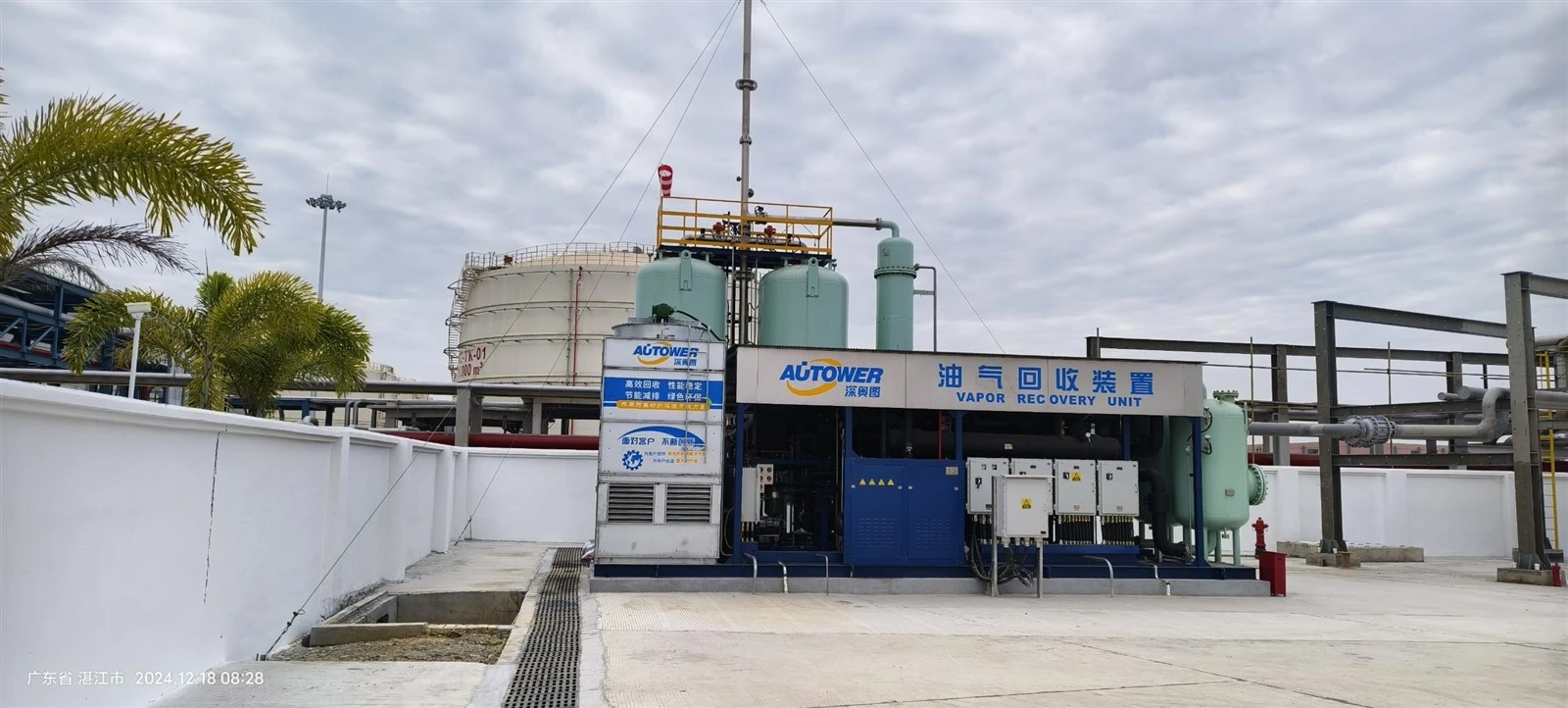
1 Problems in vapor recovery in vapor storage and transportation
(1) Transportation.
Railway transportation is currently a more commonly used method for vapor transportation. In particular, most of my country's crude oil comes from countries such as Russia and Kazakhstan. my country has built many import transportation routes, but the technological level of the entire transportation system is relatively limited, so crude oil cannot be properly arranged during transportation. The containers used to transport crude oil may be affected by freezing, flooding, corrosion and other factors during the journey. In addition, the emission of hydrocarbon gases in the vapor is highly concentrated and often exceeds the set share, making safety control extremely difficult and causing a high possibility of major accidents. Therefore, it is important to optimize the train tanks so that they can recover and rationally discharge the vapor during transportation. However, in practice, it is found that the operating cost and difficulty of this method are relatively high, and the feasibility is low.
(2) Storage.
During transportation, oil and natural gas will produce large and small breathing losses, and the external air pressure and temperature in the oil tank will increase the loss, leading to evaporation. The evaporated gas is mostly hydrocarbon gas, which has a greater density than air, so it will float on the ground and drift around. If inhaled by people, it will cause poisoning or suffocation. At the same time, this type of gas contains a large amount of nitrogen oxides that are extremely destructive to the atmosphere and will pollute the environment.
(3) Receiving.
When vapor are unloaded and received, the liquid level will rise due to shock, which will increase the pressure in the tank. At this time, the vapor in the tank will leak due to this internal stress, causing losses to the company.
(4) Leakage.
Crude oil needs to be transported by transportation lines. Most of these transportation lines bury steel pipes underground. Therefore, when the steel comes into contact with underground moisture and other substances, chemical reactions will inevitably occur, causing perforation damage to some lines, causing crude oil to leak during transportation.
It can be seen from this that when constructing vapor recovery facilities, factors such as cost, energy consumption, safety and life need to be taken into consideration, and the most optimized and profitable method must be found before operation.
2 Common vapor recovery technologies in vapor storage and transportation
2.1 Absorption method
Gasoline contains a large amount of hydrocarbon gas. If it is not specially treated during storage and transportation, it may explode. Absorption method is one of the effective ways to store such gas. The specific operation steps are: First, separate the hydrocarbon gas from the vapor, then use solvents and absorbents to dissolve it in professional equipment, and finally store the soluble gas in the liquid and the insoluble gas in the gas. There are many types of absorption technology. When using it, relevant personnel can choose the method according to the actual situation.
At present, there are two widely used absorption methods:
(1) Normal temperature absorption method can be used for normal temperature and pressure environment. This method is simple to operate and has high recovery efficiency. It is one of the more commonly used methods in vapor recovery work at this stage. The absorbent used in the normal temperature method has the characteristics of regeneration and strong applicability, but it has high requirements for the use environment during use. In practice, it is found that the best effect is achieved when the absorbent and filler are combined. The reason is that the filler can play an auxiliary role in limiting the flow rate of vapor and increasing the contact surface of the absorbent during the recovery operation;
(2) When in a normal pressure and low temperature environment, the low temperature absorption method is a more appropriate choice. The operation method is to first cool the absorbent with the help of a refrigeration device, collect the gas into the absorption tower when the temperature drops to the standard temperature, and finally spray the cooled absorbent into the gas to mix the two and react chemically. In practice, it is found that although this method is fast, it has high requirements for the environment. For example, when implementing the low temperature absorption method, the ambient temperature needs to be low, so a strong refrigeration system is required in the operating environment to reduce the temperature to -30 ℃. The equipment used in the operation is usually made of ordinary steel. The brittleness of this material will increase in a low temperature environment, so special insulation measures need to be taken for it, which will increase the operating cost in this link. The mixed liquid is required for gas extraction in the later stage, and the operation is relatively cumbersome. Therefore, this method has not been used frequently at present. The overall operation process of the absorption method is relatively simple and has strong feasibility, but the absorbent used for dissolution is relatively expensive, and it contains substances that are harmful to the human body. At the same time, the absorption liquid contains water and impurities. If the recovery effect is to be guaranteed, a certain amount of surfactant must be added during the operation to promote dissolution.
2.2 Adsorption method
The operating principle of the adsorption method is to use solids with adsorption properties to collect hydrocarbon gases in vapor. At present, activated carbon is usually used for gas collection by adsorption, because there are many voids in activated carbon, and hydrocarbon gases in vapor can be evenly distributed in these void structures, thereby playing a role in controlling concentration. After collecting the gas with activated carbon, the relevant personnel need to use a vacuum pump to pressurize it so that it can successfully complete the desorption, reverse contact and absorption process in a low-pressure environment, and finally use lean oil to collect it for the second time. This method is frequently used in practice because of its simple operation, strong feasibility and low investment cost. It should be noted that, firstly, the adsorption capacity of a single activated carbon is weak, and a large amount of activated carbon needs to be collected to complete the operation, but the adsorption time required is long, and the used basic materials cannot be reused. Secondly, it still takes a long time to desorb the collected gas after the operation is completed. Finally, the activated carbon adsorption method is only suitable for the recovery of low-concentration gases. If the gas concentration is high, the esterification reaction of the carbon layer in the activated carbon will rise, causing its temperature to rise. It was found in the experiment that the maximum temperature of the activated carbon can reach 70~80℃ at this time, which is very likely to cause a fire.
2.3 Condensation separation technology
The operating principle of the condensation separation technology is to collect hydrocarbon gases with high boiling points in vapor and can become liquid in a low temperature environment by condensation, and use them. In reality, the more commonly used condensation methods include the following two types:
(1) Direct contact method; (2) Indirect contact method. It mainly uses the refrigerant or condensing agent material in the heat exchanger tube to produce indirect heat transfer to the gas to make it liquid. Generally speaking, the mixed liquid recovered by this method can obtain oil products with higher purity without further separation treatment, and has the characteristics of high recovery efficiency. However, the ambient temperature requirement for this operation is relatively high, and it needs to reach about -75 ℃ to ensure its recovery rate. Therefore, the requirements for machine performance are also high, and the complexity of its operation is also increased accordingly. It can be seen that although the condensation separation technology is simple to operate and has strong practicality, its operating cost and energy consumption are relatively high. Therefore, it can be combined with other technologies in actual operation to achieve the purpose of learning from each other's strengths and weaknesses. For example, the condensation separation technology can be used to separate the hydrocarbon gas in the vapor into liquid, and then the absorption technology can be used to recover it.
In summary, understanding the characteristics and usage of oil and gas recovery technology can not only meet the social development needs of energy conservation, emission reduction and recycling, but also avoid major accidents caused by toxic gas leaks.


