

SCADA systems are integrated control systems of supervisory control and data acquisition.
Supervisory control and data acquisition (SCADA) is a control system architecture comprising computers, networked data communications and graphical user interfaces for high-level supervision of machines and processes.[1]
Think of a SCADA system as the central nervous system of a facility. If the pumps and valves are the muscles, SCADA is the brain that coordinates them, ensuring that a terminal operates efficiently, safely, and securely.

Core functions of SCADA
1. Industrial Process Control
The primary function of SCADA is control. Operators can manage machinery locally or remotely from a control room kilometers away. For example, in Autower's solutions, this includes Remote/Local Switching, allowing operators to seamlessly toggle between controlling a valve manually on the dock or automatically from the central server.
2. Real-Time Data Processing
SCADA systems continuously poll sensors to gather data (Data Acquisition). In a Quantitative Loading System, this involves precisely tracking the flow rate of oil or gas to ensure every drop is accounted for during transfer, enabling accurate monitoring and decision-making.
3. Direct Device Interaction and Field Execution
Building on real-time data, the system establishes a bi-directional link between the digital control platform and physical hardware, facilitating the direct management of field assets such as sensors, high-precision valves, pumps, and motors.
By continuously capturing variables like pressure, flow, and temperature, it issues precise execution commands and automatically adjusts equipment status, ensuring industrial processes operate within predefined mechanical limits and safety thresholds-providing a reliable foundation for automation.

4. Human-Machine Interface (HMI) and Operational Logic
While the system manages field devices directly, operators rely on the Human-Machine Interface (HMI) to monitor operations and enforce critical safety logic. The HMI transforms complex raw signals into intuitive process maps and interactive dashboards, offering a holistic view of system health.
Beyond visualization, it governs operational logic and sequence controls, such as ensuring a valve remains closed until grounding is verified, thereby minimizing the risk of human error through structured oversight and real-time intervention.
5. Data Logging
The system functions as a 'black box', recording every alarm, user action, and process change. This capability is essential for accident investigation, performance analysis, and continuous optimization of industrial operations.
What are the components of a SCADA system?
A SCADA system is an ecosystem of hardware and software. Let's break down these components using specific examples from high-end Metering Loading Systems.
1.Supervisory Computers
The master station that runs the management software. It handles monitoring, billing, and database management, serving as the central hub for all data.

2.Remote Terminal Units (RTUs) & Programmable Logic Controllers (PLCs)
These are the rugged computers in the field.
3.Field Instrumentation (Sensors & Actuators)
These devices interface directly with the physical product. In a specialized terminal environment, this includes:
①High Precision Flow Meters: For accurate custody transfer.
②Pneumatic Two-Stage Valves / Multi-Stage NC Valves: These allow for "slow start, fast flow, slow stop" control to prevent static electricity buildup and hydraulic shock.
③Electrostatic Protection & Anti-Spill Switches: Critical safety sensors that send "Go/No-Go" signals to the SCADA system.
4.Communication Infrastructure
The network (Fiber optic, Ethernet, 4G/5G) that connects the PLCs to the Supervisory Computer. Strong networking capabilities are essential for real-time data publishing.
How does a SCADA system work?
The workflow of a SCADA system is a continuous loop of "Sense, Decide, Act."

The operational cycle commences with Data Acquisition, where the system harvests raw signals from the field through specialized devices, such as an anti-spill switch detecting fluid reaching a critical level in a storage tank. This vital information is transmitted instantly across the Communication network to the PLC or RTU, ensuring that real-time data is available for immediate analysis.
Once the data is received, the system enters the Data Processing and Logic phase. Here, the PLC evaluates the input against its pre-programmed interlock protection protocols, automatically determining that the pump must be stopped to prevent overflow. This decision is executed during the Control stage, where the system issues an immediate command to hardware, such as a pneumatic NC valve, to shut down the flow.
Throughout this entire process, Monitoring and Alarming occur simultaneously on the HMI dashboard. The control room screen flashes a red alert to notify the operator that the loading process has been successfully halted due to high-level detection, ensuring full situational awareness of the automated response.
Industries that widely use SCADA systems
SCADA (Supervisory Control and Data Acquisition) systems are widely adopted across industries that require real-time monitoring, remote control, and high operational reliability-especially where assets are geographically distributed.
1. Manufacturing (Discrete and Process Industries)
SCADA systems are used to monitor production lines, track process variables, collect operational data, and support predictive maintenance in manufacturing facilities.


2. Renewable Energy (Wind and Solar Power)
SCADA systems play a critical role in monitoring wind turbines and photovoltaic plants, enabling performance analysis, fault detection, and grid integration.
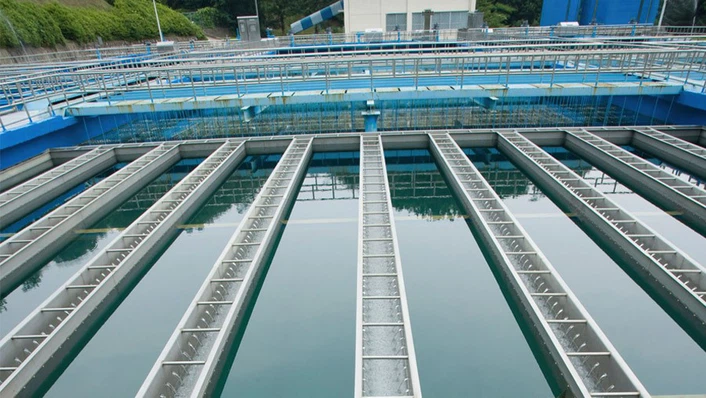
3. Water and Wastewater Treatment
Municipal and industrial water utilities rely on SCADA systems to supervise water levels, pumps, valves, chemical dosing, and treatment processes across large service areas.

4. Power Generation, Transmission, and Distribution
SCADA systems are extensively used in power plants, substations, and electrical grids to monitor equipment status, manage load distribution, and ensure grid stability.
5. Oil and Gas Industry
In upstream, midstream, and downstream operations, SCADA systems enable remote monitoring of wellheads, pipelines, pumping stations, storage terminals, and refineries, improving safety and operational efficiency.


6. Transportation and Traffic Systems
SCADA systems are applied in railways, metro systems, tunnels, and traffic management to control signaling, monitor infrastructure, and coordinate transportation operations.
Benefits of SCADA systems
SCADA systems are widely used in the eleven areas mentioned above. The following text will select a few examples to illustrate the benefits of using SCADA systems.
1. Real-time monitoring and situational awareness
SCADA systems collect and visualise sensor and field-device data in real time, giving operators a single pane of glass to see process variables, alarms and trends - which speeds up decision-making and reduces reaction time to incidents.
2. Remote control and reduced field visits
By enabling remote start/stop, setpoint changes and control actions, SCADA reduces the need for routine field visits to geographically dispersed assets, lowering O&M costs and improving safety. This is especially important for pipelines, pump stations and remote plants.

3. Improved uptime & reduced unplanned downtime (via alarms + automation)
SCADA's continuous monitoring and automated alarm logic allow faster detection and containment of faults, which directly reduces unplanned downtime - a critical economic benefit in high-value industries. For example, unplanned downtime in oil & gas can be extremely costly; industry analysis shows the cost of one hour's downtime in oil & gas has reached nearly $500,000, underscoring why SCADA-driven resilience matters.
Industry data (Oil & Gas):
Siemens reports that an hour of unplanned downtime in the oil & gas sector can cost almost $500,000 - a level of exposure that makes SCADA's remote monitoring and alarm/automation capabilities essential for reducing revenue losses and safety incidents. [2]
4. Predictive maintenance & analytics (lower maintenance costs)
When SCADA historians feed analytics and predictive-maintenance models, organizations can predict failures earlier and plan interventions - lowering maintenance costs and reducing downtime.
Industry data (Manufacturing):
McKinsey reports that analytics-driven maintenance programs - which rely on SCADA / historian data - commonly reduce machine downtime by around 30–50%, increasing asset availability and productivity. [3]
5. Operational efficiency & energy savings
SCADA integrated with energy management can optimise operating points, shift loads, and control motors/pumps more intelligently - delivering measurable energy savings and lower utility bills. Case studies across water and industrial sites show large energy improvements when automation and SCADA-based controls are applied.
Industry data (Water & Wastewater):
Schneider Electric's work on municipal wastewater retrofits shows that SCADA-enabled control and process upgrades (including DO control and improved aeration controls) can cut electricity consumption in specific plant projects by up to 75% and reduce the utility bill by about 65% in the cited case study. [4]
6. Safety, compliance & auditability
SCADA preserves time-stamped historians, alarm logs and operator actions which support incident investigation, regulatory reporting and compliance (e.g., environmental discharge records, batch records in pharma). This audit trail reduces compliance risk and improves post-event analysis.
7. Centralised asset visibility & lifecycle management
By integrating field devices, PLCs and enterprise systems, SCADA becomes the data backbone for asset-management, spare-parts planning and lifecycle decisions, improving total-cost-of-ownership (TCO) and enabling scalable rollouts.

precision in data acquisition
excellence in scada system
How to implement SCADA systems?
1. Planning
Defining the scope: How many tanks? Do we need a Train/Truck Loading Management System? What are the safety requirements (SIL levels)?
2. Designing
Selecting the hardware (e.g., Siemens S7-400), designing the network topology, and creating the HMI graphics.
3. Development & Installation
Installing the Flow Meters, NC Valves, and Card Readers. Programmers write the PLC logic for parameter settings and sequence control.
4. Testing & Commissioning
Rigorous testing of all Interlock Safety Protections. Simulating overfill scenarios to ensure the valves close automatically.
5. Ongoing Maintenance
Regular calibration of meters and software updates to ensure security and accuracy.
Autower's scada system
Autower provides industrial-grade SCADA solutions designed to meet the demanding requirements of modern industries, with a strong focus on reliability, security, and adaptability.

1. Customized Solutions for Different Industries
Autower's SCADA systems are tailored to specific industry needs, including manufacturing, energy, water treatment, and oil & gas applications.
2. Excellent Compatibility and Integration
The system supports mainstream PLCs, RTUs, and industrial communication protocols, enabling seamless integration with existing automation infrastructure.
3. Advanced Remote Access and Cybersecurity
With secure communication, role-based access control, and data protection mechanisms, Autower ensures safe and reliable remote operations.
Video Case Studies:
autower Terminal SCADA and Quantitative Loading System in Action
4. Full Lifecycle Support
From initial planning and system design to commissioning, training, and long-term maintenance, Autower provides comprehensive lifecycle support.
5. Proven Industrial Components and Trusted Technology Stack
Autower's SCADA systems are built on widely adopted, industry-proven automation components, ensuring long-term stability, scalability, and customer confidence. Rather than relying on closed or experimental platforms, Autower integrates leading global PLCs and control hardware that are well-recognized in critical industrial environments.
Case Example:
In a oil depot project, Autower deployed the Siemens S7-400 series large PLC as the core controller of the SCADA system. This high-performance PLC managed a massive physical I/O scale of over 8,000 points, covering process monitoring, safety interlocks, and quantitative loading operations. The successful implementation demonstrates that Autower's SCADA architecture is capable of handling large-scale, high-complexity industrial systems while maintaining reliability and real-time performance.
Conclusion
SCADA systems are more than automation tools-they are a foundational pillar for modern enterprises seeking higher productivity, operational safety, and long-term reliability. By enabling real-time monitoring and comprehensive data logging, SCADA systems allow organizations to shift from reactive maintenance to proactive, data-driven management.
In the future, SCADA systems will continue to evolve toward greater intelligence, cloud connectivity, and integration with advanced analytics technologies. Aligning with these trends, Autower remains committed to delivering forward-thinking industrial control solutions that help customers build resilient and future-ready automation systems.

References:
1.Wikipedia- https://en.wikipedia.org/wiki/SCADA
4.SchneiderElectric- https://www.parkson.com/sites/default/files/documents/document-case-study-city-riverbank-ca-1188.pdf
FAQ
Q: 1.Can SCADA systems be customized?
A: Yes. Leading providers like Autower offer modular systems. You can choose to implement just a Tank Level Monitoring module or a full Loading Management System. The software logic (like sequence control) is tailored to the specific operational rules of the facility.
Q: 2.What are the 4 levels of SCADA?
A: Field Level: Sensors (Flow meters, Anti-spill switches) and Actuators (Valves).
Control Level: PLCs (e.g., Siemens S7-400) and RTUs.
Supervisory Level: The SCADA computer servers and HMI screens.
Planning/Management Level: Integration with ERP/MES for business logistics.
Q: 3.Is SCADA obsolete?
A: No. While IIoT (Industrial Internet of Things) is growing, SCADA remains critical for real-time control and safety. Modern systems, like Autower's, evolve by integrating IIoT features like cloud networking and mobile access while maintaining the robust control logic of traditional SCADA.
Q: 4.What is the lifespan of SCADA?
A: A well-maintained SCADA system typically has a lifespan of 10 to 15 years.However, components like field instruments (flow meters) require regular calibration, and software requires updates. Using high-quality hardware, such as the S7-400 series PLCs used in Autower projects, helps ensure longevity.


