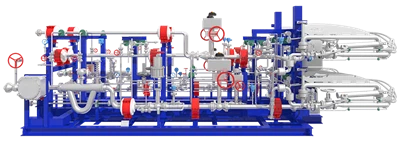
Description of Modular Skid Design And Global OEM/ODM Business
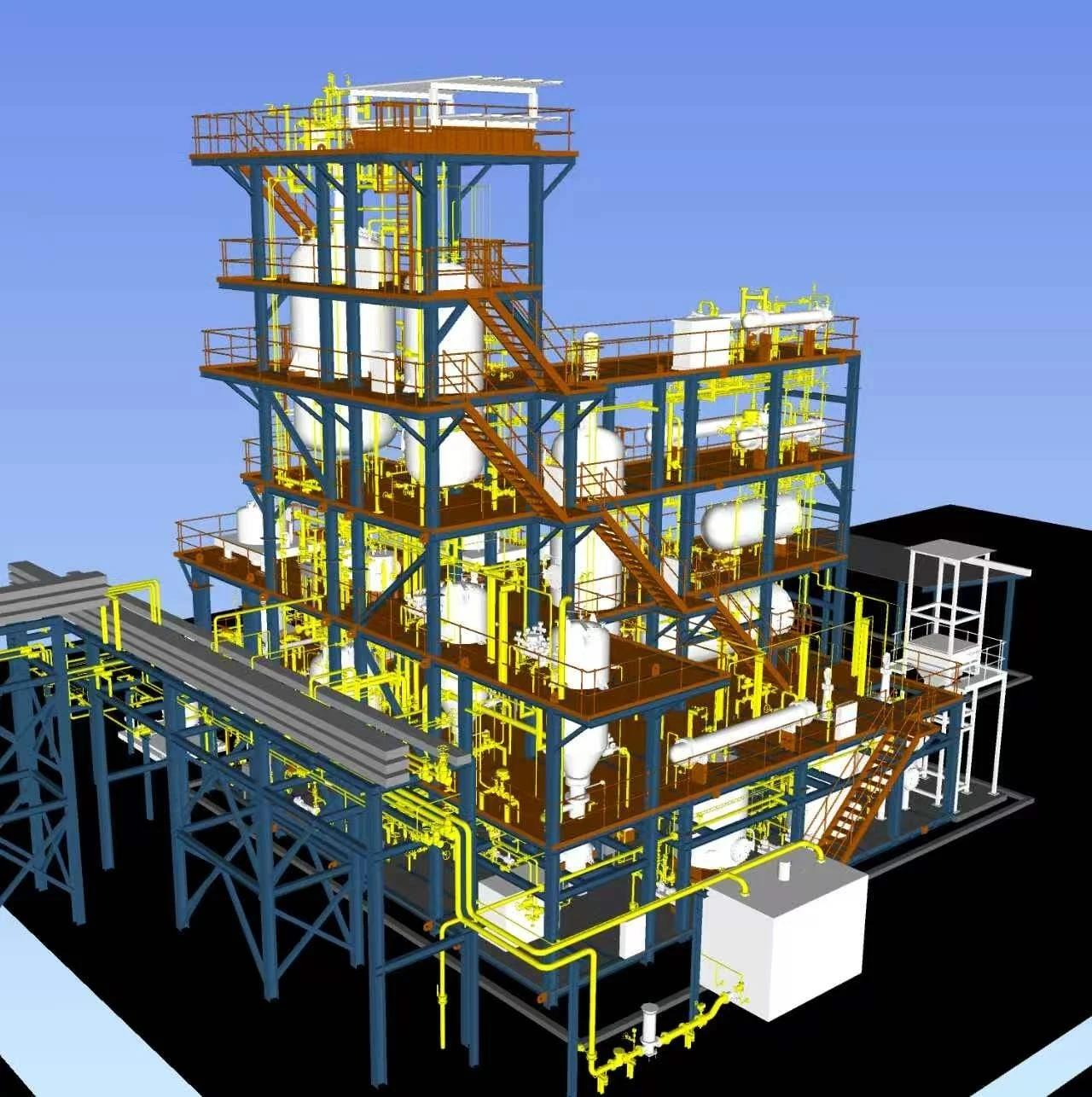
Modularization refers to the rational division of a plant into multiple modules composed of equipment, piping, electrical instrumentation, and structural steel, which are designed to facilitate fabrication, transportation, and overall installation. This process is known as the modular design process.
The evolution of modular design and manufacturing has progressed from the first generation of simple modularization to the current third generation, with an increasingly higher degree of modularization. Modular design can effectively reduce labor costs by approximately 20%, with particularly significant results in developed countries. At the same time, it reduces the footprint, enabling more compact plant layout. It also enhances safety, improves quality, protects the environment, and strengthens operability and maintainability.
A typical skid-mounted process plant has the following characteristics:
Structural Steel is fully assembled.
Process piping is installed and tested.
Instrumentation is installed with pneumatic and electrical signals connected to skid edge junction boxes.
Insulation, painting and fireproofing completed.
 |
Basic Requirements for Modular Fabrication
For modular skids, the following requirements shall also be met:
The equipment layout within the module shall comply with fire protection codes and other applicable standards and specifications.
Equipment shall preferably be arranged in accordance with the process flow sequence.
The size, weight, and center of gravity limitations of the module shall be satisfied.
Equipment within the module shall not extend beyond the structural steel boundary of the module. However, equipment may extend beyond the structural steel boundary provided that the safety of the equipment can be ensured during transportation, and in such cases, the overall dimensions shall not exceed the module specification limits.
In addition, the modular layout of the plant should take into consideration the requirements for module transportation, stacking, lifting, installation, operation, and maintenance.
Advantages of Modularization for Chemical Process Equipment
Cost Reduction — Reduces labor costs by approximately 20%, with even more significant savings in developed countries where on-site labor is expensive.
Compact Layout — Reduces the plant footprint, enabling more compact equipment arrangement.
Improved Safety — Fabrication in controlled workshop environments minimizes on-site hazards and reduces exposure to field risks.
Higher Quality — Factory-controlled conditions ensure better welding, inspection, and overall workmanship compared to field fabrication.
Environmental Protection — Reduces on-site waste, noise, dust, and emissions associated with traditional stick-built construction.
Enhanced Operability — Pre-tested and pre-commissioned modules allow for faster and more reliable startup.
Better Maintainability — Standardized modular design facilitates easier access, replacement, and future expansion.
Shorter Schedule — Parallel fabrication of modules off-site while civil works proceed on-site significantly reduces overall project duration.
Reduced Weather Dependency — Indoor fabrication is not affected by adverse weather conditions, ensuring schedule reliability.
Easier Transportation and Installation — Modules are designed for transport and can be lifted and installed as complete units, reducing on-site assembly time.
We're professional modular skid design and global oem/odm business manufacturers and suppliers in China, specialized in providing the best customized service with competitive price. We warmly welcome you to buy high quality modular skid design and global oem/odm business in stock here from our factory. Contact us for quotation.