

3 Analysis of Causes for Abnormal Temperature Rise in Activated Carbon
Research findings indicate that abnormal temperature rise in activated carbon primarily unfolds through a chain reaction mechanism, divided into the following three stages:
① Adsorption heat accumulation: Physical adsorption heat combines with chemical adsorption/reaction heat, driven by high-concentration oil/gas adsorption and sulfide oxidation;
② Catalytic cracking: Carbon deposits or metallic impurities catalyze hydrocarbon cracking, releasing heat from the cracking reaction; ③ Uncontrolled self-oxidation, where activated carbon undergoes self-oxidation, reaching its autoignition temperature threshold (160–200°C for lignin-based carbon, >300°C for coconut shell carbon).
3.1 Changes in Activated Carbon Properties
Alterations in activated carbon properties are a key factor contributing to abnormal temperature rise. Over extended usage periods, activated carbon may undergo aging, manifested as reduced specific surface area, altered pore structure, and changes in surface chemistry. These alterations can increase adsorption heat, triggering temperature rises. Additionally, activated carbon may adsorb difficult-to-desorb substances during operation; the accumulation of such substances may catalyze exothermic reactions, further exacerbating temperature increases. Failure to replace saturated activated carbon promptly can reduce adsorption efficiency, heightening the risk of abnormal temperature rise.
3.2 Influence of Hydrocarbon Components
Different hydrocarbon components exhibit varying adsorption enthalpies and reactivity. Certain high-boiling-point, macromolecular hydrocarbons may be difficult to desorb. Research indicates that hydrocarbons with carbon chains longer than C8 exhibit significantly elevated desorption energy barriers on activated carbon surfaces, leading to cumulative adsorption enthalpy. Additionally, reactive impurities like sulfides and olefins present in oil and gas may undergo exothermic reactions such as oxidation or polymerization on the activated carbon surface, causing temperature increases. The combined effect of these factors can lead to abnormal temperature rises in the activated carbon bed.
3.3 Improper Operating Parameters
Incorrect operating parameter settings constitute another significant factor triggering abnormal temperature increases. Excessively high inlet gas concentration may cause concentrated release of adsorption heat, inducing localized overheating; excessively high inlet gas velocity may accelerate heat accumulation; excessively high inlet gas temperature directly elevates bed temperature, increasing the risk of abnormal heating; improper control of desorption temperature and duration may
result in excessive residual high-boiling-point substances on the activated carbon surface, increasing exothermic reactions during subsequent adsorption processes; additionally, unreasonable cycle settings may lead to heat accumulation, ultimately triggering abnormal temperature rise.
3.4 Equipment Design Defects
Equipment design flaws may also cause abnormal temperature rise. Improper internal structure design of adsorption tanks can result in uneven gas distribution, causing localized overheating; inadequate heat dissipation system design may fail to promptly remove adsorption heat, leading to temperature increases; improper placement of temperature monitoring points may inaccurately reflect the actual temperature of the activated carbon bed, potentially failing to detect temperature anomalies in time, delaying corrective actions, and causing heat accumulation and temperature rise.
4 Prevention and Control Strategies for Abnormal Temperature Rise in Activated Carbon Adsorption Tanks
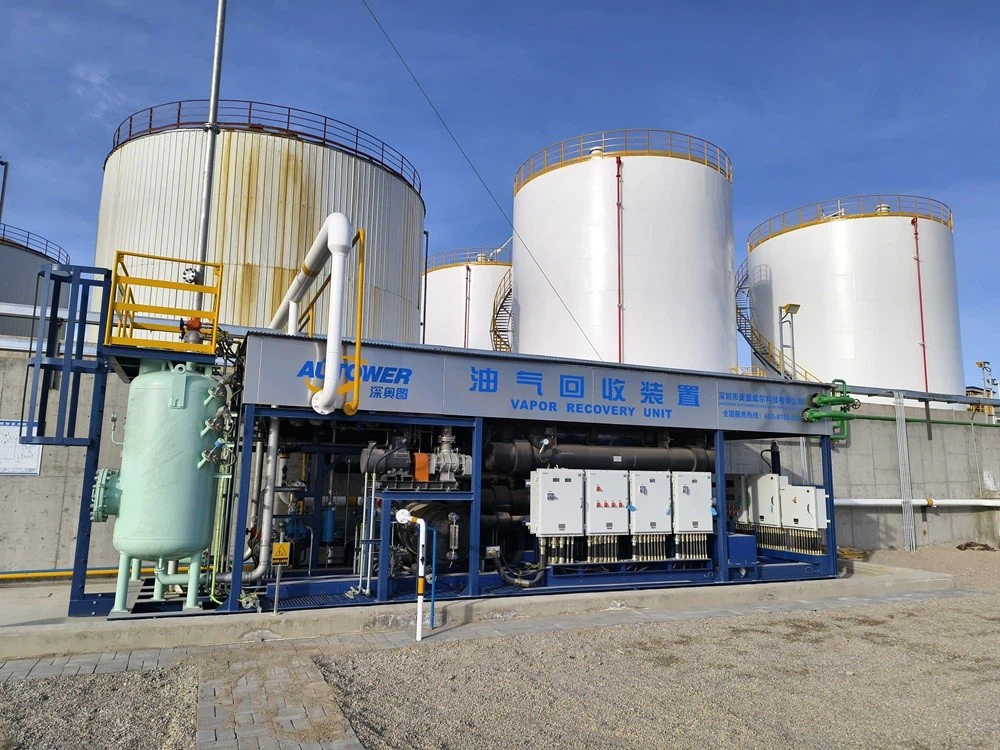
4.1 Micro-Modification for Temperature Reduction
For oil depots facing high summer temperatures in southern regions, direct oil/gas supply from refineries, elevated absorber temperatures, and near-saturated oil/gas processing capacity, measures should be implemented to reduce absorber temperature and the temperature of oil/gas entering adsorption tanks and absorbers. This aims to suppress abnormal temperature rise in activated carbon. This approach focuses on minor modifications to the existing activated carbon adsorption process, temporarily excluding combined processes like condensation. Specific modifications include: installing spray systems, water-cooling equipment, or reflective/insulating materials on the pre-adsorption tank inlet line, the vacuum pump outlet/pre-absorption tower inlet line, and the pre-spray tower line from the absorbent storage tank. This reduces the temperature of oil and gas entering the adsorption tank, minimizing heat accumulation. Simultaneously, lowering the absorber temperature enhances absorption efficiency and prevents high-concentration oil vapors from re-entering the adsorption tank for re-adsorption and heat release, thereby controlling activated carbon temperature rise.
4.2 Adsorption Agent Selection and Optimization
Select activated carbon with appropriate pore size distribution and surface chemistry based on the actual oil vapor composition being treated. Regularly replace or regenerate activated carbon to avoid abnormal temperature rise risks caused by aging. Consider using surface-modified or catalyst-doped activated carbon to enhance its high-temperature resistance. Focus research on combined applications of multiple adsorbents to control adsorption heat. For example, experiments confirm that a silica gel-activated carbon composite bed reduces adsorption heat by 35% and extends breakthrough time for C6–C12 hydrocarbons by 20%. Silica gel consists of rigid, amorphous chain-like and network-structured silica polymer particles. Its pore size distribution spans a wide range without uniformity, a characteristic similar to activated carbon. This similarity determines that silica gel exhibits performance comparable to activated carbon in organic gas adsorption applications. Mature hydrophobic silica gel exhibits hydrophobicity, non-flammability, and anti-static properties. When used as an adsorbent, it does not adsorb water vapor entrained in oil and gas streams and does not generate heat during the adsorption process. Specifically, a bottom layer of silica gel can be filled with an upper layer of activated carbon. On one hand, silica gel demonstrates superior adsorption performance for high-concentration oil and gas streams, with significantly lower heat release during adsorption compared to activated carbon. On the other hand, activated carbon exhibits good adsorption performance for low-concentration oil and gas while generating minimal heat during adsorption. Using silica gel in the lower layer to adsorb high-concentration oil and gas, followed by activated carbon in the upper layer for low-concentration oil and gas, optimally leverages the adsorption properties of both adsorbents [1] and reduces adsorption heat generation from a process perspective.
4.3 Optimizing Adsorption Tank Design
Refining adsorption tank design is crucial for preventing abnormal temperature rises. Key measures include: adopting modular design for easier maintenance and replacement; improving internal tank structure to ensure uniform gas distribution; enhancing heat dissipation systems to boost thermal removal efficiency; and strategically placing temperature monitoring points to achieve comprehensive monitoring of the entire activated carbon bed. A segmented adsorption tank design is recommended. This approach distributes adsorption heat across multiple stages, reducing the thermal load per tank.
Based on operational experience with activated carbon adsorption oil and gas recovery units at the author's company, abnormal temperature increases in activated carbon units consistently stem from increased processing volumes. While expanding tank volume to increase activated carbon usage boosts unit capacity, This design increases the thermal load per adsorption tank, compromising stable operation. Instead, we recommend increasing the number of adsorption tanks to boost capacity. This approach reduces thermal load per tank and enables tank rotation, allowing for more thorough desorption and promoting long-term stable operation.
4.4 Optimizing Operating Parameters
(1) Optimize inlet gas concentration and temperature based on actual operating conditions to prevent overheating caused by excessively high concentrations or temperatures.
(2) Increase the turnover rate of the absorbent (gasoline) to prevent prolonged stagnation. Prolonged stagnation leads to increased proportions of light components and elevated temperatures within the absorbent, reducing absorption efficiency. This allows unabsorbed high-temperature, high-concentration oil vapors to re-enter the adsorption tank, increasing the unit's load pressure and causing continuous heat accumulation.
(3) Rationally control desorption temperature and duration to ensure complete desorption.
(4) Optimize cycle periods to balance adsorption and desorption processes, preventing heat accumulation.
(5) Establish comprehensive monitoring and early warning systems to promptly detect and address anomalies.
4.5 Development of Novel Adsorption Materials
Developing novel adsorption materials represents a long-term solution to abnormal temperature rise issues. Research should focus on developing adsorbents with enhanced thermal stability and selectivity, such as metal-organic frameworks (MOFs) and covalent organic frameworks (COFs). Explore integrating phase change materials (PCMs) into adsorption beds to leverage their heat-absorbing properties for temperature control. Develop self-cooling composite materials to improve the system's thermal management capabilities.
5 Conclusion
Abnormal temperature rise in activated carbon within oil and gas recovery units primarily stems from changes in carbon properties, influence of hydrocarbon components, improper operating parameters, and equipment design flaws. To address these causes, preventive strategies should include optimizing activated carbon selection, refining equipment design, improving operating parameters, and developing novel adsorbents. The findings of this study hold significant implications for enhancing the safety and efficiency of oil and gas recovery systems. They can effectively mitigate the risk of abnormal temperature rise, extend equipment service life, and improve oil and gas recovery efficiency. Future research should focus on developing and applying novel adsorbent materials, as well as establishing intelligent monitoring and early warning systems to further enhance the performance and reliability of oil and gas recovery systems.


